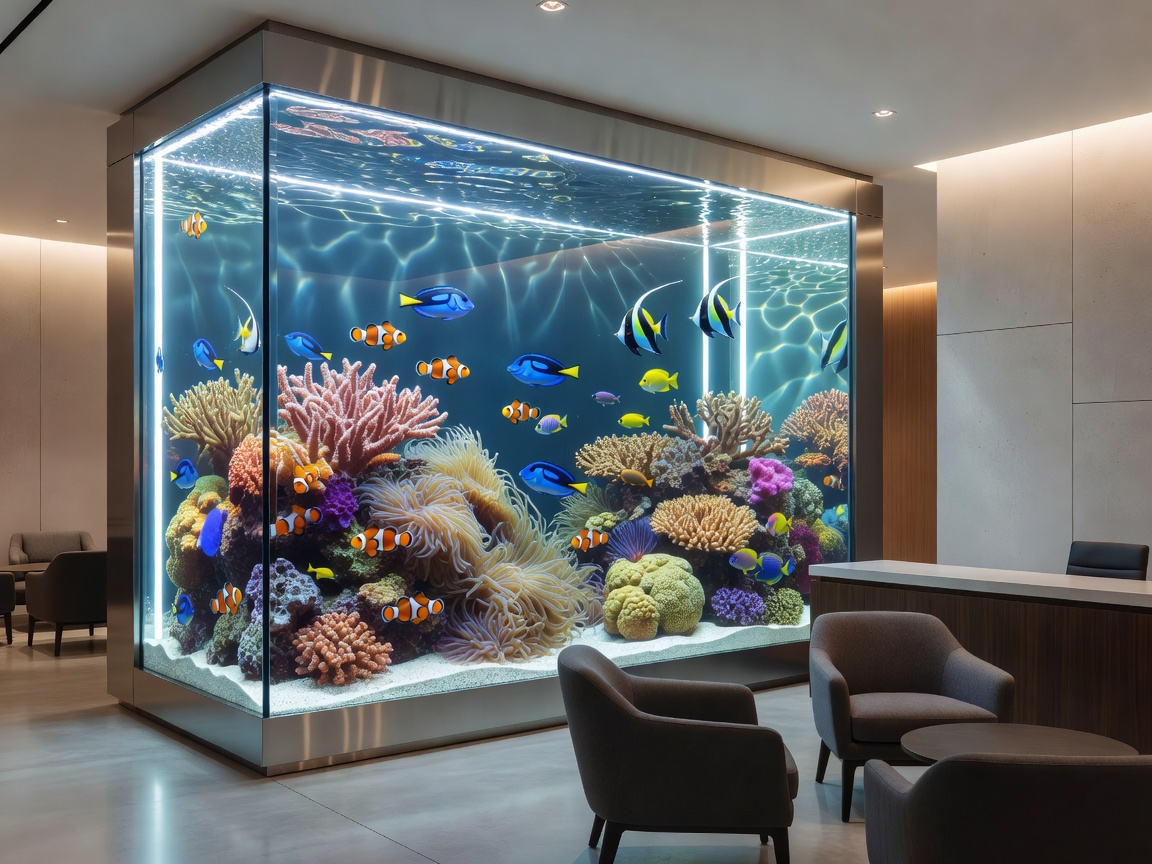
Plan for the environment
Commercial aquariums are seen by staff, visitors and customers. Placement should consider sight lines, lighting, noise, queue routes, cleaning access and nearby furnishings. A display that looks good at opening time must also remain maintainable during normal operations.
Reception areas may prioritise quiet presentation and clear sight lines. Hospitality spaces may need service visits outside busy periods. Retail displays may require stronger coordination with trading activity. The aquarium type and the property routine should be considered together.
Scheduled maintenance
A commercial schedule should identify service frequency, access contacts, working areas, equipment locations and record storage. The exact frequency depends on aquarium size, stocking, lighting, filtration, footfall and presentation expectations. It should be reviewed when the environment or system changes.
Routine work can include glass care, substrate awareness, water-care observations, equipment checks and external surface cleaning. The scope should be agreed before service begins. Chemical products should not be treated as universally safe.
Access coordination
Coordinate keys, security procedures, loading routes, lifts, restricted areas and customer-facing timing. Keep service equipment organised and avoid leaving wet materials where they create a slip or trip risk. Building rules take priority.
Access problems should be recorded rather than silently reducing the service. A clear record helps the property team decide whether timing or access arrangements need to change.
Appearance standards
Presentation includes clean glass, controlled equipment visibility, tidy cabinetry, clean surrounding surfaces and a consistent waterline. Standards should be described in practical language. Avoid promising a fixed visual result when lighting, stocking and room conditions can change.
Downtime and continuity
Commercial operators may need to plan around events, opening hours and seasonal occupancy. Maintenance can be arranged as a regular operational task, but no service frequency guarantees uninterrupted operation. Equipment faults, access restrictions and environmental changes can affect continuity.
Keep current records for equipment, observations, completed work and matters requiring follow-up. Escalate unusual sounds, leaks, unstable conditions or animal-welfare concerns to appropriately qualified professionals.
Good for
- Offices and managed workplaces.
- Hospitality and reception displays.
- Retail presentation aquariums.
- Properties needing documented routine care.
What to know
- Commercial frequency is system- and site-specific.
- Access planning protects the service routine.
- No response time or continuity guarantee is implied.