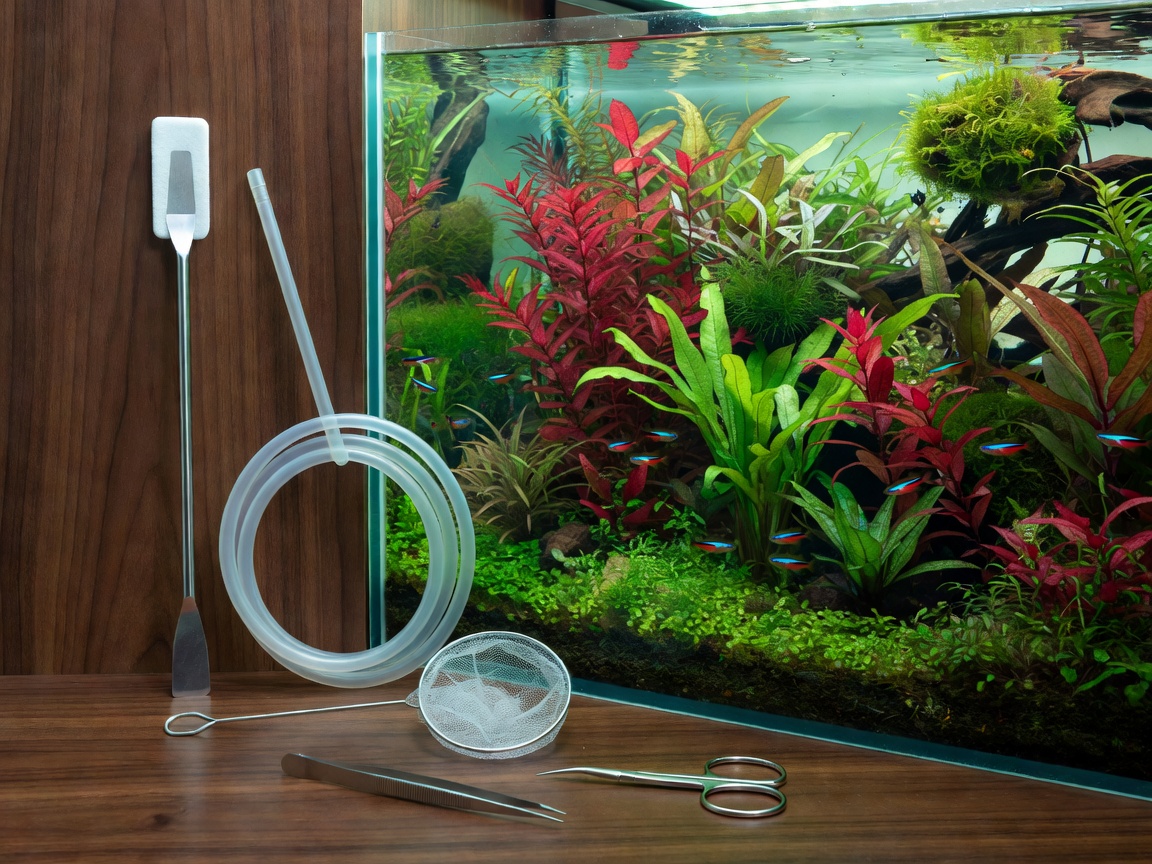
Set a useful schedule
A maintenance schedule should reflect aquarium size, stocking, feeding, lighting, filtration and location. A lightly used private display may need a different rhythm from a busy reception aquarium. The schedule should state what is checked, who completes it and where observations are recorded.
Use short routine checks between deeper visits. Look at water level, temperature display, equipment noise, visible debris, glass condition and animal behaviour. Observation is not diagnosis. Unexpected changes should prompt an appropriately qualified assessment.
Glass and external surfaces
Glass cleaning removes visible deposits and improves viewing. Use tools suitable for the aquarium surface and keep them dedicated to aquarium use. Pay attention to corners, seams, lids and the waterline. External panels, cabinet fronts and nearby floors also form part of the presentation standard.
Do not use household cleaners where spray or residue could enter the aquarium. Follow product instructions and keep cleaning materials separated from general domestic supplies.
Substrate and algae awareness
Substrate can collect waste and uneaten food. Maintenance should consider the substrate type, plant roots, hardscape and the biological life within the system. Over-disturbing a mature layout can create more disruption than benefit.
Algae is influenced by light, nutrients, surfaces and maintenance consistency. It is not a single problem with one universal solution. Review the whole routine rather than applying unverified chemical treatments. Chemical dosing should never be treated as universally safe.
Equipment inspection
Check filter flow, pump sound, tubing condition, heater or cooling indicators, lighting timers and accessible connections. A change in sound or flow can be useful information. Do not open, repair or modify electrical equipment while it is connected. Use qualified professionals for electrical faults.
Filter maintenance should follow the equipment instructions and the needs of the system. Excessive cleaning or replacing all biological media at once may affect system stability. The correct approach depends on the filter design and maintenance history.
Water-change planning
Water changes should be planned around the aquarium, source water and established care routine. Record the date, approximate volume and relevant observations. Do not copy a water-change formula without understanding the system. Water treatment products and chemical adjustments require system-specific guidance.
Private and commercial routines
Private maintenance can be arranged around household access. Commercial care must also consider opening hours, customer visibility, access coordination and presentation. A commercial schedule should define arrival arrangements, service areas, documentation and what happens if access is unavailable.
Good for
- Recurring residential aquarium care.
- Reception and hospitality display routines.
- Glass, substrate and equipment checklists.
- Maintenance records for handover and continuity.
What to know
- Cleaning frequency is system-specific.
- Chemical treatment is not universally safe.
- Records make changes easier to discuss.