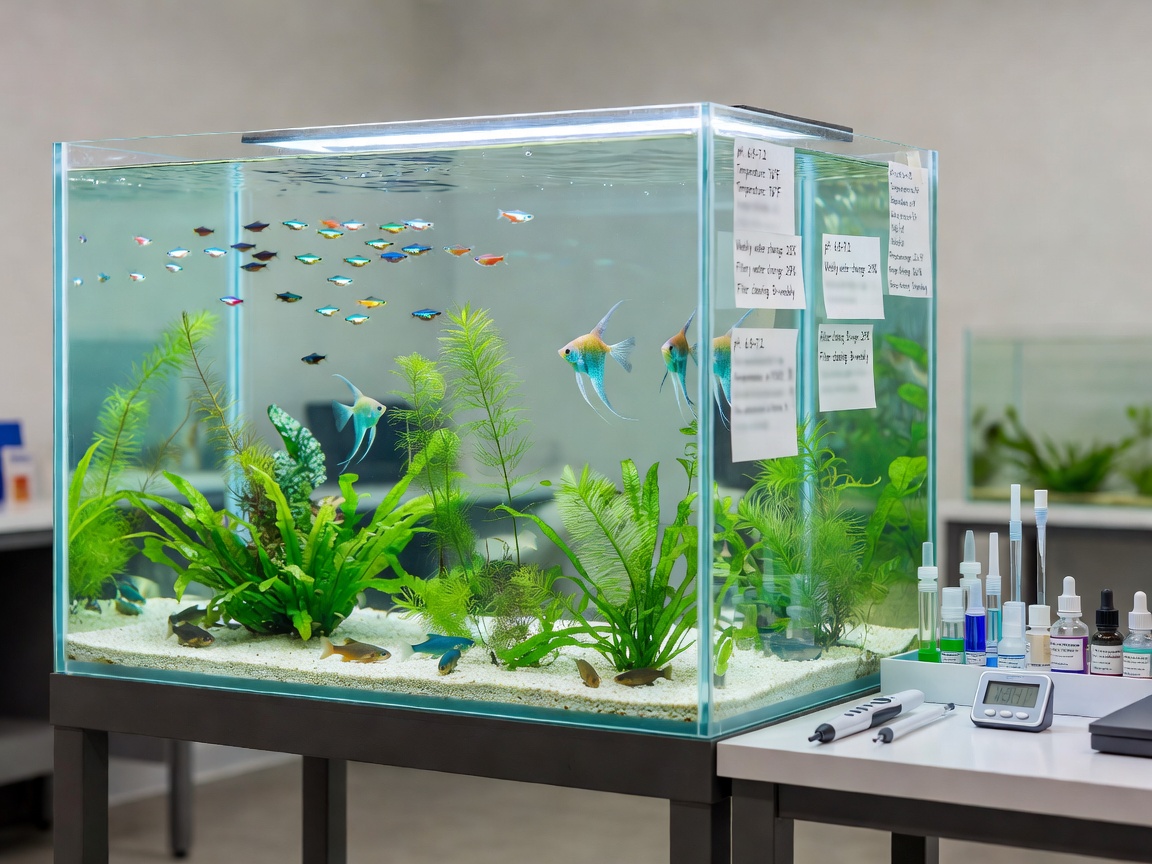
Understand the system
Water-care conversations often use terms such as temperature, pH, hardness, salinity, ammonia, nitrite and nitrate. These describe different parts of the environment. A reading has meaning only when considered alongside the aquarium type, inhabitants, source water and recent maintenance.
Monitoring is most useful when it is consistent. Record the date, time, observation, equipment status and any relevant maintenance. Trends can be easier to interpret than a single result. Test equipment should be used according to its instructions, with attention to storage and expiry.
Temperature awareness
Temperature affects the environment and the way equipment operates. Observe the display, room conditions and heater or cooling indicators. Sudden changes, persistent instability or unusual equipment behaviour warrant professional assessment.
Do not treat a number as a complete animal-health assessment. If there are concerns about fish or other aquatic animals, contact an appropriately qualified aquatic animal or veterinary professional.
Filtration relationship
Filtration supports water clarity, circulation and biological processes. It does not replace maintenance. Flow, media condition, pump operation and cleaning frequency all influence the system. A blocked intake, damaged tubing or altered circulation can change the aquarium quickly.
Mechanical, biological and chemical filtration have different roles. Chemical media may be appropriate for a defined purpose, but it should not be added automatically. Seek system-specific advice before changing media or using treatment products.
Freshwater systems
Freshwater aquariums vary from simple planted displays to complex systems with specialised water requirements. Source-water characteristics can influence hardness and pH. Plants, substrate and décor also affect the environment. The maintenance plan should fit the inhabitants and the intended stability of the aquarium.
Marine systems
Marine aquariums commonly require closer attention to salinity, evaporation, circulation and equipment. Evaporation changes water level without removing salt, so replacement planning matters. Marine systems can also have more demanding equipment access and maintenance requirements.
Do not apply freshwater assumptions to a marine aquarium. Product labels and general internet advice are not substitutes for system-specific guidance.
When to request assessment
Professional assessment may be appropriate when readings change unexpectedly, equipment loses performance, the aquarium repeatedly becomes unstable, or observations raise animal-welfare concerns. Bring records, recent maintenance details and equipment information. Do not diagnose disease or begin aggressive chemical treatment from a general guide.
Good for
- Routine monitoring plans.
- Freshwater and marine system comparisons.
- Maintenance records and handovers.
- Early review of recurring instability.
What to know
- One reading cannot describe the whole aquarium.
- Consistency improves the value of records.
- Animal-health concerns need qualified advice.